Showing posts with label Travel. Show all posts

Friday, December 7, 2012

Kali's temple and town


I just spent a day and a half in Calcutta, a city that always makes Bombay look good. The deficiencies of the capital of what was once India’s most industrialised state became apparent days before I got there, when I found all three-, four-, and five-star hotels booked out. Obviously, synchronising my visit with the start of the deciding test of the India-England cricket series didn’t help, but what kind of metropolis has so few upscale lodgings that the barmy army and maybe some suits attending conferences can take over every single room in town?
Plan B was to look at the B&B ratings on Tripadvisor. I found a room available at Relax Inn, which turned out to be perfectly satisfactory.
Ten minutes into my ride from Calcutta airport, I asked the driver for his mobile phone number. He told me he possessed no cellphone.
Me: No phone? But what if there’s no parking where I alight? How will I know where you are?
Driver: I’ll be around.
There was no parking outside Relax Inn. Having checked in, I came out to give the driver instructions, but he had already gone off to find a parking spot. When I was ready to leave for my first appointment after freshening up, I asked the doorman if the driver had returned to tell him where he was parked. He had not.
I called the car rental agency’s number on the receipt.
Me: I think the driver has left.
Him: No, he must be there.
Me: But how can I find him?
Him: Look around, I’m sure he’s there somewhere.
Luckily, autorickshaws are plentiful in Cal.
On my way back from the first meeting, I stopped at a chemist to buy a razor, toothpaste and stuff I’d forgotten in my hurried packing. It was an impressive looking branch of the chemists’ chain Frank Ross. Eight men were at the counters when I entered, each wearing a green jacket embroidered with the Frank Ross name, each sitting at a computer looking like he was doing work of national importance. I saw two customers, neither of whom was being served. When I asked if they could sell me a razor, one of the men gave me a can’t-you-see-I’m-busy look. Eventually, a ninth man appeared from the stock room, and I asked him for a disposable razor.
He said, “We only have packs of four. It’s a Buy 3, Get 1 Free promotion.”
He took a strip of Gillette Prestos off a hook and held them out.
Him: See, four for 54 rupees.
Me: I’m sure you can sell them individually as well. They must have individual prices.
Scrutinising the packaging, he found each razor was priced at 18 rupees. But then he shook his head.
Him: If I sell you one, then who will buy the remaining three?
Me: The same people who buy them when there is no special offer.
He looked at me with a pitying expression. Obviously, I was the only idiot in the world who would buy a single razor when four could be had for the price of three, but the man was generous enough not to say so. He told me, only, that he could not offer me the razor I desired.
A corner shop sold me a Gillette Presto without hassle. Back at Relax Inn, I found my driver had reparked next to the lodge, and was ready to ferry me around. He couldn’t understand why I hadn’t scoured the neighbouring streets looking for him.
The next day, I decided to begin at the Birla Academy, which was hosting an interesting show curated by Shaheen Merali. Getting there, I found the place opens only between 3 and 8 pm. I had consulted the website in advance, but the people who built the elaborate site obviously felt that stuff like opening timings, or even the address of the place, didn’t merit mention.
Next stop was the Kali temple at Kalighat. I’d never actually been inside, since I avoid functioning temples as far as possible, but with time on my hand, I braved the gauntlet of flower sellers, guides and touts. I lost count of the number of people who tried taking money off me between the gate and the sanctum. Every few steps somebody would insist shoes had to be removed at that spot. One man screeched as I passed him despite his warning, as if I’d broken a dreadful taboo. The temple has no official footwear storage, so one is forced to leave slippers and shoes in the care of shopkeepers. They refuse money for looking after the shoes, but ask you to buy a garland or some other item of worship, which I refused to do. Finally, I found a man willing to watch my shoes for five rupees. As I looked for the entry queue, a man asked if I wouldn’t rather pay 100 rupees and gain instant access to the sanctum. I said I’d wait in line.
“It will take three hours”, he said.
“Obviously your goddess has nothing against lying”, I wanted to reply, but ignored him. In the end, it took about forty minutes for me to get my five seconds in front of the startling icon with black face, red eyes and a massive golden tongue hanging out of its mouth. The Kali temple is relatively modern, having been built in the 19th century, and features a domed sanctum, which means it is a little larger and better ventilated than most garbhagrihas. The sanctum’s walls are painted yellow, stained with soot, clad with white tiles at the lower reaches, all of which gives it the feel of an old-style Irani restaurant kitchen. The idol is held in a cage in the centre, above which is a canopy shaped like the hood of a kitchen’s exhaust. As our line slowly wound around the room, pressing against the wall, priests went round thrusting flowers into hands, daubing and smearing stuff on vacant foreheads, and generally ensuring that every individual in line contributed to the temple kitty. Periodically, our line would stop as VIP guests, which meant anybody forking out extra dough, were thrust in from the exit point for an expedited darshan. In the brief time I was given to examine the idol, no fewer than five entreaties / demands for contributions rang in my ears.
“Give me fifty rupees. Ten rupees”
“Don’t give me anything, give it to the temple. Put it in the donation box”
“Put money in this box, in the box”
“You haven’t made a contribution. Give me something.”
It’s a pity that workers in businesses such as Frank Ross Pharmacy have a statist perspective. Rather than government employees, they ought to model themselves on the Kali temple’s priests, who are perfectly mercenary, single-minded in their determination to get some cash from each person who enters their domain. OK, I’d prefer it if businesses left out the cheating, the harangues, the stealing, but no business does that without proper regulation, and temples are among the least regulated commercial operations in the country.
I suppose the money-grabbing at the Kali temple was no worse than I’ve encountered at Puri Jagannath or the shrines that dot Pushkar lake. On the other hand, Kalighat offers neither the architectural delights of the former, nor the marvelous atmosphere of the latter.
As for the city as a whole, I'm amazed I’ve never disliked it. In fact, I’d even concede I am a little fond of Calcutta. It has character, a certain laid-back gentleness, and retains the core of a great city in its monuments, parks, and museums. It doesn't hurt that the place is cheap (everything in Bombay costs about 50% more), and the inhabitants fond of fish, red meat and liquor (though alcohol is reasonably priced, Calcuttans don't drink themselves under the table in the manner of Goans and Keralites). Also, there are plenty of smart, good-looking women around (so what if backcombing never went out of fashion here?). Right now, citizens are feeling pretty depressed, having hopped out of the frying pan of Communist rule and landed in the fire of Mamata Bannerjee’s lunacy. It’s always wrong to believe things can only get better. Like Iranians discovered when Khomeini took over from the Shah, things can always get worse. And yet, Calcutta does seem to be developing fast, particularly in areas close to the airport like Salt Lake and New Town. The development is very much in the Gurgaon mode, all tower blocks and malls, with none of the sense of community that still defines neighbourhoods in Calcutta proper; but that’s preferable to the dilapidation and decay whose depiction has provided lucrative careers for so many painters.

Wednesday, March 21, 2012

Skyless night

The layers of dirty brown air standing over Indian cities are visible anytime one takes a domestic flight, but what I witnessed yesterday was something absurd. Peering out of a window after the seat belt sign flashed on, I couldn’t see a thing, no Baha’i temple, no long canal, no fields or towers. It was the same minutes later, when, having brought the plane down a few thousand feet and aligned it with the runway, the captain asked flight attendants to take seats for landing. This was no billowy white fog, nor even the smog that is thick on the ground on winter mornings. It was just dirty air. I looked at my watch when I discerned a road, and the wheels touched ground exactly 75 seconds after that moment. Till then we’d been flying blind, aided solely by navigational instruments. I walked off the plane at 1pm; the day was warm, 30 degrees Celsius. Looking up, I thought of a question I’d struggled with as a child: What exactly is the sky? Most days, we see clouds streaking the blue, and the sun, millions of miles distant; and at night we look up at stars that are light years away. From the tarmac at Delhi airport, all I saw was an even brown diffusing the sun’s rays into a glare uncomfortable to the naked eye. The sun itself was entirely occluded. Whatever the sky might be, it isn’t what was visible over Delhi yesterday.
A skyless night followed the skyless day. The moon, needless to say, was invisible and ineffectual. The city's lights created what looked like a red dome above me, of a shade somewhere between rust and blood. Early for a dinner meeting, I walked around Hauz Khas village. A little way off the gentrified stretch, restaurants vanished and offices grew sparse. A cybercafé was followed by a broken-down general store. Then single-room tenements, old men sitting around in vests and pyjamas, children in rags playing hopscotch. Millionaire landlords in waiting.
Reversing course at a garbage tip, I moved upscale again. Tangled cables and crisscrossing electrical wires ran a few feet above head level, providing semi-legal power to semi-legal eateries where expats and affluent Indians hung out in equal numbers. I climbed up a dozen flights of narrow stairs to Bohème, and took in a marvellous view of the tank that Khilji built and Tughlak spruced up. It reminded me of a restaurant in Lahore called Cooco’s Den which overlooks the Badshahi mosque and is reached after huffing and puffing up about as many steps. Dishes on the Cooco’s menu are raised to the terrace in baskets from a ground floor kitchen. Nothing so quaint at Bohème, but I could sip on some semi-legal beer instead, which I thought a pretty good bargain. After a couple of drinks, we moved down to Gunpowder, lavishly praised by food critics, but, as it turned out, grossly over-rated. We had buffalo and goat that had been cooked so mercilessly they were impossible to tell apart. As for the appams, better crisp-fluffy ones are to be had at Culture Curry near my home in Shivaji Park.

It was cool this morning, and the sky was blue.

x

Wednesday, September 28, 2011

Koh Samui: Making the Connection

I've travelled a fair amount over the years, but that evidently hasn't stopped me from planning dumb itineraries. After Jabeen and I decided to vacation in Koh Samui, I booked the tickets on Bangkok Airways, which now flies daily to the Thai capital from Bombay, and has the most flights to Samui (I read somewhere that the airline owns Samui airport). The cheapest available flight from Bangkok to Samui was scheduled just an hour after the arrival time of our Bombay-Bangkok flight. I thought to myself, "It's a squeeze, but Samui airport offers visas on arrival, so we just need to transfer directly to our connecting flight without any intervening visa hassles".
An elementary mistake, as I was informed at the check-in counter in Bombay. Since the Bangkok-Samui leg was a domestic flight, we'd need to get visas before boarding it. Recalling how long the visa process had taken on my last visit to Thailand, I recognised there was little hope of making our connecting flight.
But Bangkok Airways and Thai immigration outdid themselves in helping us out. Our plane landed just ahead of time and, as we entered the terminal, I spotted a Bangkok Airways staffer holding up a placard with our names on it. This was 6 am, IST. He rushed us to the counter where visa forms were handed out. By 6.10, we had filled the forms and changed money to pay for the visas. He then led us to a fast track counter, where our visas were stamped in under five minutes (the other counter was thronged with applicants, mostly Indian). In another five minutes we went through passport control. At 6.25 we passed security. At exactly 6.30, we were at the gate from which the Samui flight was to take off. It began boarding seven minutes later, and we touched down on the island by 8 am, Indian time.
I said to myself, "Here's a country that takes tourism seriously".
Despite all their efforts on our behalf, we almost managed to mess things up in another way. We'd completely forgotten that our photographs would have to be attached to the the visa form, whether we filled it in Bangkok or Samui. Luckily both of us happened to be carrying mugshots of ourselves in our cabin baggage. Jabeen said, "There's always so much stuff in my handbag that I don't need but leave inside 'just in case'. Well, now all the junk I've carried all these years has proven its worth".

Sunday, August 7, 2011

Calcutta blues

I was in Calcutta earlier this week, and landed needing to use an ATM machine to recharge my phone, and pay my credit card dues, which I invariably leave to the last minute. Public sector bank employees happened to be on strike that day, demanding whatever it is that bank workers demand when they go on strike. Now, a stoppage in Bombay or Delhi or most places wouldn't be an inconvenience unless someone wanted to make a large withdrawal. Most transactions are done at ATM machines these days. Besides, my account's with HDFC, not a public sector firm. In Calcutta, however, a strike by public sector bank employees means private banks are also closed, presumably in solidarity. Bizzarely, it means all ATM machine booths are shut too. At night, on my way back to the hotel, I saw one Axis Bank ATM working, and a couple of others with semi-open shutters, lights on inside, and the legs of the guard visible beyond glass doors. Unfortunately, HDFC ATMs offered no such tantalising views.

Any Time Money? Obviously not in Calcutta.

Yes, I know that's not what ATM stands for.

Wednesday, March 30, 2011

The fuel surcharge scam

Regular travellers across the world have by now got used to the absurd division of airline fares between a meaningless 'base price' and an arbitrary 'fuel surcharge'. I call the surcharge arbitrary because it does not vary with the price of aviation turbine fuel. In the early days of the surcharge being put in place, travel websites would quote only the base fare, and those booking tickets would have to click through one or two screens before hitting the full ticket price.
The first website to quote complete fares up front was Cleartrip and, once I discovered it, I stuck with it: it was honest, easily navigable, offered good deals, didn't send out spam text messages, and had a Google-like simplicity to its GUI.
Recently I bought a ticket on Cleartrip which came with a 'free ticket' offer. The offer wasn't the reason I bought the ticket, but if it had been, I'd have ended up feeling cheated. Here's why. A few days after buying that ticket, I looked up fares to Goa. The 'free ticket' was restricted to SpiceJet, which quoted a price of about 2200 rupees on the Bombay-Goa sector, one-way. Go Air and Indigo offered virtually the same price. The fare break-up was, however, very different on the three airlines. Indigo's was something like: base fare, 900 rupees; fuel surcharge, 1000 rupees; taxes and levies, 300 rupees. Go Air's was: base fare 400 rupees; fuel surcharge, 1500 rupees; taxes and levies 300 rupees. SpiceJet had a base fare of exactly one rupee, and a fuel surcharge of 1900 rupees. So, taking up ClearTrip's free ticket offer, which applied only to the base fare, would have saved me a grand total of 100 paise. I chose to shell out the extra rupee and fly Indigo.

Tuesday, March 15, 2011

Kababs etc


I'm staying at Nizamuddin for two days, so naturally I braved the flies and dirt of the road leading to the dargah, and lunched at Karim's. The meal was fine, the seekh kababs succulent and flavourful, but I was reminded of the hype about the restaurant by articles quoted on the menu's front page.
It is strange so many people believe Karim's offers some kind of authentic Mughlai cuisine. To begin with, what we call Mughlai is very distant from what the Mughals ate. Aside from this fact, which applies to all Indian restaurants claiming to serve Mughal dishes, Karim's stands out as particularly inauthentic because all the food coming out of its kitchens is cooked in a partially hydrogented vegetable oil known as vanaspati. It's a cheap ghee substitute originally marketed by Unilever, and based on a chemical process that's been used in industrial-scale manufacturing for exactly a century (Procter & Gamble began making Crisco in 1911). There were no Mughals left in 1911, but had there been any, I can guarantee they'd have turned up their noses at the idea of kababs and biryani cooked in vanaspati. Jabeen and I did exactly that when we first dined at the Karim's in Old Delhi over a decade ago, and I'm sure the Mughals had more discerning palates where this kind of food is concerned.
Karim's has gone posh in the past couple of years; the Nizamuddin branch is now a spacious, two-level affair with air-con. The owners clearly have no need to use vanaspati as a cost-saver any longer, but they've stuck with it. They believe, I suppose, that their regulars have acquired a taste for the inferior, trans fat laden cooking medium they have used for decades.

Unlike the Mughlai tradition, the nawabi one that flourishes in Lucknow has genuine claims to authenticity: a number of current chefs are descended from men who cooked for Wajid Ali Shah and his extended family.
One such chef has opened a chain of biryani and kabab eateries called Kakori House. The three Kakori House outlets in Bombay have a few tables for in-restaurant dining, but operate mainly through delivery and take-away. They provide by far the best home delivered kababs I have had in my life. The first time I ordered from Kakori House I wasn't fully satisfied. We asked for haleem and galouti kababs, and didn't care for the consistency of either. It's one thing for kababs to melt in the mouth, quite another for them to be melted before they get to the mouth. I like meat to be at least a bit aldente since, unlike the nawab for whom the galouti kabab was supposedly invented, my teeth are virtually intact. Kakori House's burra kababs, which I was treated to by my friend Jerry and subsequently ordered from home, provide exactly the right combination of resistance and softness. Their smoky flavour is exceptional, way better than most high-end Indian restaurants can manage; and the biryani is brilliant as well: flavourful but not over-spicy, and loaded with juicy goat meat.
Kakori House is a premium caterer: most dishes cost between 150 and 300 rupees. But for those who are sick of run-of-the-mill Mughlai offerings, and are willing to pay extra for real quality, I whole-heartedly recommend this relatively new chain, particularly the mutton biryani and burra kababs.

Friday, January 28, 2011

Delhi hotels


The recent Delhi trip was my first visit to a city involving stays in two five star hotels in succession. When I speak of Delhi, I'm referring to the National Capital region, including Gurgaon, for it was at Gurgaon's Leela Kempinski that I first landed.


The hotel's embedded in Gurgaon's Ambience Mall, and came on board after architectural plans were drawn, so its exterior includes a standard shopping mall glass facade. The inside felt pleasant enough but unremarkable. I later learned Rajeev Sethi had put together a selection of artwork in the lobby and rooms. I'm afraid I didn't notice any of this art in my walks across the marble floor to the glass door in the mornings, or my walk across it to the lift in the evenings. What I did notice was the number of people saying namaste to me at every point: the chap who opened the car door; the two security men; two women just inside the door; two males flanking the lifts; and any other staffer who happened to be within ten yards of me at any time of day or night.
Delhi has completely gone over to the namaste greeting. In Bombay they still do 'welcome', 'good morning', 'good afternoon' without reflexively folding hands.
The room was very comfortable with a pleasant view over some scrub-like forest. All fixtures worked, and the wifi was fast, though the 550 rupee price tag for 24 hours was a bit hard. What I didn't understand was the wooden floorboards, which creaked below me every time I walked across the room, and creaked above me whenever the guy upstairs moved across his. There's really no excuse for using wooden floorboards in this day and age: tile or stone does perfectly well, and if you're worried about cold floors, a carpet's far better than wood.
Strangely the second hotel I stayed in used wooden floorboards as well: a peculiar fixation appears to have gripped the hotel designers of Delhi. This second hotel was The Park near Connaught Place. It claims to be a five-star hotel, but really is not. Like, I checked in at night, and I suppose the windows had been kept open by the previous occupant or by staff, and so the room was really cold. I turned the climate control to 25 degrees, but it didn't help. I called reception and was told the hotel had no heating, the thermostat was there only to adjust the level of cooling. They gave me a portable heater to keep the temperature comfortable, and I kept the AC switched on to ventilate the room, but really, a five-star hotel in Delhi ought to have central heating, no?
The lobby of The Park is done in retro-sixties style: bright, velvet-y biomorphic sofas, bead curtains, that sort of thing. Problem is, the place is showing its age, giving the lobby the feel of a fancy bordello.


The Park is a tourist's hotel, unlike the Leela which is full of suits; the senior citizens I saw looked quite happy. Maybe the decor reminds them comfortingly of what was cutting edge in their teenage years.


I was less than happy. The rooms are small; the water in my bathroom seeped under the glass partition separating shower from toilet; there's no wifi, only a slow ethernet connection at an extortionate 450 rupees plus taxes for an hour and 800 plus taxes for a day; the staff looked a bit too eager for tips; and the muffins at breakfast had a kerosene flavour.

The hotel that seriously impressed me on this trip was The Trident, Gurgaon, which I visited for a late night drink with a friend.

Designed by a Thai architect, the hotel makes use of traditional Indian structures such as the bangla roof, but within a spare overall plan, not minimalist by any means, but calm, reflective. Entry at night is spectacular: one walks through a gate to a black rectangle of water within which gleam four fires. To one side is the dramatically lit entrance to the reception area.
Going back to the Delhi versus Bombay theme, here's another reason Delhi scores: it has lots of interesting modern and postmodern architecture, while hardly anything good has been built in Bombay after the art deco era.

Wednesday, October 27, 2010

The conspiracy

I haven't been able to post because I've spent all my spare time replying to comments about my Lonely Planet article. The Hindutva guys are on Thorn Tree, as well, defending Lonely Planet. Which should give LP some pause for thought.
A conspiracy theory had to be around the corner, and one has been invented. Apparently, though I claim to be a freelancer, I have 'intimate links' to Outlook Traveller and Time Out, which are rivals to Lonely Planet. The person who wrote that obviously doesn't understand what a freelancer is. We freelancers write for anybody who pays well enough. Tomorrow I'd happily write for LP if they offered me a story and sent me to an interesting location.
The Outlook Traveller experience, in fact, was a disaster. I wish there was some way I could remove my name from the piece on the Web. My story was changed radically and a number of new sentences added, containing factual errors. For example, the City Palace is called "a complex of beautiful buildings in granite and marble". Anyone who has been to Udaipur knows there's very little granite and marble in the City Palace. But there the error stays, with my name attached.
I was so furious with Outlook after that assignment, that I swore off writing for them, before agreeing to do a piece just fifteen days ago. None of the editorial staff responsible for shredding my Rajasthan articles are there any more, so I decided to let bygones be bygones.
Still, I am some way from being an Outlook Traveller shill.
I'm much more loyal to Time Out; after all, I had a column in the mag for years, and think it's kept an incredibly high standard since its inaugural issue. But my Time Out loyalty doesn't extend to guidebooks. I bought Lonely Planet India, after all, not the Time Out guide. That was because I liked the LPs I used on foreign trips. The only Time Out guide I have consulted was the Chicago one, and I didn't find it particularly useful.

Meanwhile, I'm in Delhi again, trying to get a paper done for a seminar tomorrow. I've visited about once each month for the past six, and discovered in the process that Delhi drivers know nothing about the city. One time, I wanted to go to the India International Centre, asked the driver if he knew it, or IIC or the Habitat Centre (which the autowallas usually know). He kept shaking his head. I said finally, OK, just take me to Lodi Gardens and I'll direct you from there.
He had not heard of Lodi Gardens.
Today my driver got lost looking for Kasturba Gandhi Road and then Maharani Bagh. Luckily, I've developed a habit of picking up one of the free maps on the India Tourism counter at the airport. It's always proved really useful, and even more so now that every tourist car driver seems to have arrived in Delhi within the past six months.

UPDATE: October 28. This evening after the seminar was done for the day I was chatting with a few friends including Jitish Kallat. Jitish is staying in the same guest house as I am, in Maharani Bagh.
I said to him, "You got in pretty late last night".
He said, "It took me two and a half hours from the airport. The driver took me to a place called Rani Bagh. After about forty-five minutes of driving from the airport, I began to suspect this wasn't where I should be heading. I asked the driver if he was sure. He said he was absolutely sure, 'Rani Bagh used to be Maharani Bagh, now everyone called it Rani Bagh for short'."
Once at Rani Bagh Jitish grew doubly sure this couldn't be his destination. Rani Bagh is in north-west Delhi and Maharani Bagh in the south-east.

Monday, October 18, 2010

Lonely Planet's Islamophobia


My Yahoo! column this week focuses on errors and biases in Lonely Planet's wildly popular India guide. Read the piece here.
A couple of years ago I emailed Lonely Planet, pointing out some of the errors mentioned in this article. I received no response, and when the new edition arrived I found it carried most of the same mistakes.

Friday, September 17, 2010

Indigo wigs out

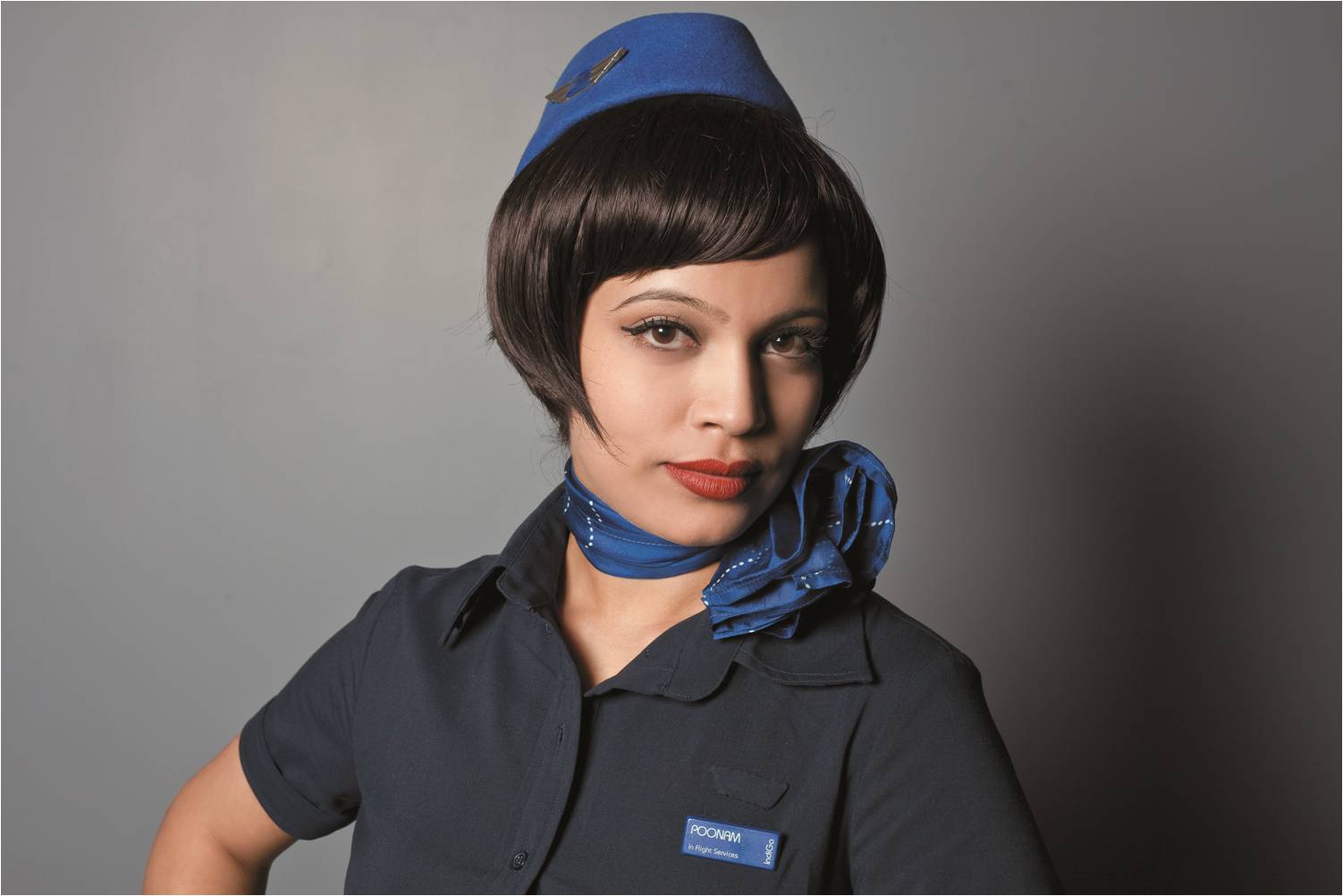
A month ago, I posted about my favourite budget airline Indigo's new look. I wrote about the short bobs all the flight attendants were sporting: When it works, it looks great in a chic French way. When things go wrong, the hair seems wig-like..."

It now seems the hair looked like a wig because it WAS a wig. A number of flight attendants didn't want to cut thier tresses, and were given the wig option. Now, in a further relaxation of rules, Indigo is allowing long hair to be pinned up neatly. I knew that would happen sooner or later. My final comment in that previous post was: "I wonder how long it will be before a very Indian combination of laziness, love of long hair and hatred of regimentation leads flight attendants to protest the airline's extended uniform." Not long at all it turns out; the uniformity lasted all of one month.

Wednesday, September 1, 2010

Bangalore


Went to Bangalore for a day. Flew Spice Jet, which was a mistake. I was told of a fifteen minute delay at check-in; we were cooped up in a bus for ten minutes without air conditioning or ventilation before being permitted to board; once aboard the captain extended the total delay time to an hour. After saying we'd be on the ground for another 40 minutes, he ended with, "Enjoy the flight".
The passengers in the back half of the airplane were headed to Calcutta. Why would anybody fly Bombay - Bangalore - Calcutta? Because it's a cheap fare, I guess. The Bangalore leg, though, was far from cheap. In fact, it was the most expensive flight that morning. The only one departing between 6.30 and 8 in the morning, unfortunately.
Bangalore's newish airport is about 50 kilometers from the city. My taxi's meter said 630 rupees at the end of the ride. That's a record for any trip I've taken in a taxi in India.
I wanted to try out a good new restaurant, but was forced by the delay to grab a meal at Cafe Y, the eatery closest to my destination. I'd heard about it, a hip place for youngsters to hang out, apparently.
The room was dark and warm when I entered. The only electrical appliances working were two light bulbs and two ceiling fans.
"No power, sir", the waiter smiled.
I chose to sit outside breathing diesel fumes from the generator.
Lasagne?
Sorry sir, no power.
Soup and garlic bread?
Sorry sir, no garlic bread, no power.
I settled for two dishes that could be prepared without recourse to an oven, toaster or microwave: seafood chowder and a plate of potato disks. I ate them feeling happy about the facilities in my home town. They haven't turned the lights out yet, that's one thing we can hold on to in Bombay.

Thursday, August 19, 2010

Indigo's new look


I travelled to and from Delhi on Indigo, and was surprised to see the flight attendants not only dressed identically, but sporting similar make-up and hairstyles. The new look consists of a bob matched with bright red lipstick and nail polish. When it works, it looks great in a chic French way. When things go wrong, the hair seems wig-like and the lipstick garish. I wonder how long it will be before a very Indian combination of laziness, love of long hair and hatred of regimentation leads flight attendants to protest the airline's extended uniform.

Tuesday, August 17, 2010

Return to Ashok Yatri Niwas


The first hotel I ever checked into and stayed in by myself was Delhi's Ashok Yatri Niwas (AYN). An Orwellian tower in a great location just off Janpath, Yatri Niwas was the government's budget option in the capital, a grade below Kanishka next door which was, in turn, cheaper than the five star Ashok in Chanakyapuri.
I was in Delhi in mid-December for a scholarship interview, and in those days was reluctant to stay with aunts and uncles who would gladly have provided more congenial accommodation. AYN had tiny rooms, cement beds, and lifts that took forever to get up and down its twenty or so floors. I couldn't ventilate the musty room because it was unbearably cold even with the windows shut. After spending a miserable night under a lone blanket, trying to breathe through a blocked nose, I woke to discover the Yatri Niwas promise of a hot morning shower was greatly exaggerated. It is possible veterans had used up the warm water before 7 am.
I wasn't in the best frame of mind on reaching the India International Centre, but the interview went well, and I was given the scholarship. That night I walked from AYN to the Central Telegraph Office on Janpath, which was one of the few places in the city offering long distance direct dialling facilities. I called home, and my girlfriend's home, and then celebrated with a fudge sundae at Nirula's, before trudging back shivering inside and out.
When I heard about AYN next, it was because a well-connected man had murdered his wife and burnt her body in the hotel's giant tandoor. This was not great publicity for the establishment, which found it hard to attract visitors even after changing its name to Indraprastha.
Two nights ago, I landed in Delhi at 11pm. I was on a work trip and had been told shortly before my plane took off that I'd be staying at the Ramada Plaza. We got there near midnight, but even at that late hour I was certain I was entering the building that once housed Ashok Yatri Niwas. The place has been tarted up in a baroque-Roman style -- fountain in the front yard, cherubs, marble columns, gilt decorations, Fragonard reproductions, statues of barely-clad women -- but the rooms are tiny as ever. I was surprised to see a flyer boasting the Ramada Plaza had won a best boutique hotel award. What does 'boutique hotel' mean if a 400 room, 20 floor joint run by a multi-national chain can be so described?

Tuesday, June 22, 2010

Swisscom uses Gandhi


Spreading goodness has never been so easy, the ad for Blackberry on Swisscom reads.

Monday, June 21, 2010

Back to chaos


I returned yesterday after a week spent in Zurich, which, for good reason, is regularly ranked as one of the world's best cities in quality of life surveys. I was rushing about from morning to night each day, but never felt as exhausted as I did within half an hour of stepping back in Bombay. That was partly because of the hometown's hot embrace, its noise and crowds. Mostly, though, it was because of its dysfunctional systems. In the past, obstacles to progress used to make themselves apparent right after one stepped out of the plane. Now, immigration and customs are painless, but the nasty stuff starts outside the airport.
To begin with, there's no public transport option. The taximen's union will ensure it stays that way. To prevent taxis from cheating customers, the administration has set up a system of pre-paying the fare, which means you end up shelling out in advance the amount the driver would have extracted from you on top of the meter fare.
There's a long line for booking a cab, after which you go out and hunt for the vehicle carrying the license plate number listed on your bill. Quite often, you don't find it, because the driver's left or the cab's hiding in some inaccessible corner, in which case you have to go back and stand in line again for another number.
Luckily I found my guy easily, but two minutes into the ride he stopped and crossed the road to stand in another line, some kind of police verification procedure. Beggars have found this an opportune spot to harry passengers. Soon after the driver returned, we encountered that other Bombay specialty, the 11pm traffic jam.
I can see the objections starting to form. Switzerland has fewer people than Bombay. Its banks use secrecy laws to make money from corrupt government officials in nations like India. Oh, and it gave women the vote after we did. None of this alters the shock of going from one of the world's most livable cities to one of its least habitable.

Update, 22 June: Today, taxis are on strike. Will be fun for tourists flying in to Bombay late at night: no train, no bus, no cab, no rickshaw.

Wednesday, June 16, 2010

Zurich


Zurich’s a far more interesting city than Geneva, the only Swiss town I’ve been to previously. It has steeply steepled churches and squares dominated by drinking water fountains emerging from carved stone pillars. There’s a lot of stone carving everywhere, sandstone, I think; seems to be a strong Swiss tradition. The typical plaque on buildings in the old town reads something like this: The original edifice dates from the 12th century, XYZ lived here between 1550 and 1580, the building was extensively modified in 1872, and has been on the heritage list since 1965. I suppose that’s the kind of history you get when you haven’t been at war for centuries.
The river around which the town is clumped is frighteningly clean: you can see the stones on the bed in water fifteen feet deep. Definitely fine for swimming, probably fine for drinking. I recall punting trips on the Cherwell at the end of which my entire arm, onto which a few drops splashed each time I raised the pole, would break out in a rash.
The weather’s been drippy, but the sun came out for five minutes while I was sitting outdoors in a café on Monday, and the trees took the opportunity to release a load of pollen into the air. Within an hour I was sniffing and sneezing and reaching for the anti-histamines. Luckily the stuff didn't turn me into a zombie for the day. I could pay attention to art around, and there was plenty that deserved careful attention.
I’m in Switzerland courtesy of Pro Helvetia, which has sponsored a week’s trip centred on Art Basel, the world’s most important art fair. I will blog about the fair when I have some free time, probably next week. Apart from two days spent in Basel, we're being taken to museums in Zurich, Glarus, Winterthur, Aaarau, Bern and Geneva. It's a packed schedule, but promises to be rewarding.

Tuesday, June 8, 2010

Poker in Goa


I’m back from a three day poker trip, and sort of rested, although the ground still moves under my feet every now and then. That’s to be expected after sitting through three straight nights in the bottom deck of a floating casino.
Along with about twenty of the players who travelled to Goa for the India Poker Championship, I opted to stay at the local Ginger, part of the Tata Group’s budget business hotel venture modelled on chains like Ibis and Holiday Inn Express. Ginger offers a good deal for single travellers, unlike other hotels in Goa that shave just 10 or 15 percent off their double occupancy rate. Rooms are clean and neatly designed, the aircon and plumbing work, and breakfast is included. On the downside, the Wi-Fi rate is extortionate, at over 100 rupees and hour, and coverage is pretty bad in the rooms. I took my laptop along, but preferred to stroll across to a cybercafe to blog and check my email.
I was surprised to see a number of holidaying families staying at the hotel, a sterile building within the most sterile precinct in all Goa. Last time I was there, during the previous IPC in March, I even noticed a honeymooning couple at breakfast. Makes me wonder what experience such people are looking for when they come to Goa. It isn’t the beaches, booze and nightlife; it isn’t the atmospheric lanes of Fontainhas and the architecture of Old Goa; it isn’t the lush landscape of palms, cashews and paddy fields. What, then, draws them to the state?
The draw for me this time was poker and nothing but poker. The rest of this post will concentrate on that, and will sound like Greek to those unfamiliar with the game. You have been warned.


I didn’t suffer any huge bad beats like I had last time round. In fact, during one cash game, I hit a set of queens to crack pocket aces. It’s just that I didn’t win coin flips when I most needed to. During the 10K tourney I had pocket 5s against my friend Sam Rattonsey’s AK offsuit; we both had medium stacks, but the blinds were getting uncomfortable. I pushed from the button and of course he called from the small blind. He hit a king and went on to place first, which made me glad he’d won that hand and not I.
I played a few interesting hands in the late stages of the 20K tourney.
Hand 1:
I’d built my stack to 15000 when the blinds were 300 / 600. Under the gun, I was dealt pocket queens and raised to 1800. A guy in middle position reraised to 5000. He was on tilt a bit because he’d split a pot holding aces against pocket tens, all chips in pre-flop, when the board showed a spade flush and neither player held a spade. Still, I felt I was probably beat, putting him on kings, with a small chance I was racing against AK. If he had kings, all his money was almost certain to go in on the flop. If I hit a set of queens, I would definitely double up. I was getting about 6 to 1 implied odds, which didn’t justify a call when the odds were 7.5 to 1 against hitting that set. I called mainly because I had to factor in the possibility that he had AK. A queen did show up on the flop, and I did double up, and was in a pretty strong position at that point with 30K chips.

Hand 2:
I was in the big blind, still at 30,000 odd, with the blinds at 1000 / 2000 and about fifteen players left. Chap in early position limped, as did the short stacked small blind. My hand was A 10. The limper, whose name was also Girish, had about 11,000 left over. I’d been at the same cash table with him the previous night, and knew his style well. He was, basically, the biggest calling station I have seen in my life. He paid me off a number of times, but his most remarkable calls were against other players. One time, he called a preflop raise, a bet on the flop, and an all-in bet on the turn with K Q, having hit neither card, and having no draw. Another time, he called someone down to the river and called a huge river bet with just ace high. So basically I knew I was getting a call from him. I figured A 10 was good and pushed. He called with K Q and rivered a queen. I lost about half my stack in that hand.

Hand 3:
The very next hand, a player from my Bombay group, Masood, shoved with about 15,000 from middle position. I was in the small blind and again had A 10. I felt Masood was weak, and was hoping he had A 9 or A 8, which would make me a 7 : 3 favourite; in any case I was sure I was ahead and called. He showed K Q, which meant I was a 6 : 4 favourite like in the previous hand. Unfortunately, he turned a queen, and left me with just one small blind worth of chips, which lasted four more hands before I was eliminated.

It’s been six IPC events without a cash, which is a bit frustrating. Luckily my success at the cash game tables allowed me to more than cover my buy-ins for all those events, plus travel and accommodation expenses.

Friday, May 28, 2010

Asia rules


Skytrax just published its annual list of the world's best airlines, and Asia dominates it. In fact, the top 10 airlines are all based in Asia / Oceania. The Americas, Europe and Africa were blanked. Since Skytrax is headquartered in the United Kingdom, I can't ascribe any regional bias to the selection, which is computed after a large customer response survey.
These are the top 10 in the Airline of the Year race for 2009-2010:
1. Asiana Airlines
2. Singapore Airlines
3. Qatar Airways
4. Cathay Pacific
5. Air New Zealand
6. Etihad Airways
7. Qantas Airways
8. Emirates
9. Thai Airways
10. Malaysia Airlines

Asiana Airlines, by the way, is Korean.

I can understand why American airlines didn't figure, their service standards have always been among the lowest in the world, but the banishment of Europe is a bit surprising. I wouldn't expect British Airways or Air France to make the grade, but Lufthansa and Virgin Atlantic should have been in with a shot.
Kingfisher Airlines won for best Indian carrier, and Indigo for best Indian low-cost carrier. The first doesn't impress me too much: if a company is prepared to lose thousands of crores of rupees, it can easily offer great service. The trick is to do that while also making a profit despite tough competition. That's what Indigo's been doing year after year. On short flights I pick Indigo over full-cost carriers even when cost isn't a factor. I don't care overmuch if I'm not fed in the course of an hour long journey. What I want is a comfortable flight which gets me to my destination on time. Indigo's clean, new planes and punctuality haven't let me down so far.

Saturday, April 10, 2010

El Clásico


On May 2 last year, Jabeen and I were waiting at Esfahan's bus terminal for our overnight coach to Tehran. On a snowy television set, a maulana droned a sermon watched by two or three pious travellers but ignored by the majority in the room. Suddenly the picture changed to a football match, and the excited commentary got everyone's attention. Once people saw FC Barcelona were playing Real Madrid, they gravitated to the TV, and soon the seats in front of the screen were all taken. Madrid went ahead to cheers from some of the viewers, then Henry scored for Barca to even greater applause, and Puyol followed up with a goal immediately after. When the bus came in a few minutes later, the rapt audience was reluctant to board. Messi put in a third goal just as we exited the terminal, and a home defeat seemed certain for Madrid.
That match ended 6-2 in Barcelona's favour, and pretty much decided last year's winners. El Clásico returns today as Barcelona travel to the Bernabeu, and the two Spanish footballing monsters are closer than ever in the league. After 30 games, they are tied on 77 points, and Madrid leads the standings by virtue of the slimmest of goal differences: 57 to Barca's 56. To get an impression of how far ahead of their other opponents these two are, consider that third placed Valencia are over 20 points behind; and Sevilla, in fourth, are on 48 points, virtually 30 points adrift of the league leaders.
Here's the bummer: I will not get to watch the match tonight because no Indian satellite channel has shelled out the million dollar asking prize for La Liga telecast rights. It's a travesty, really. I mean, what's a million dollars for networks like Star Sports? For years, one could tune to Ten Sports or ESPN around midnight and find Zidane or Eto'o or Ronaldinho working their magic. These days I take for granted that any event in any sport I want to watch will be streaming on one of the eight or nine sports channels to which I subscribe. Hamilton, Federer, Kobe, Tiger, they're all out there. But Messi and Christiano Ronaldo are not. Makes me wish I was in Iran again.
When I wake, I'll go to YouTube and watch the goals. So, go Barca, teach the fat cats at Real that money isn't everything.
UPDATE: They did it, 2-0, helped by two brilliant passes by Xavi. The first came from a one-two with Messi. Two Barcelona forwards were offside, and so Real's defenders thought they had everything under control. But they didn't catch the tiny guy whizzing by to chest the ball down and score with his weaker right foot. The second came when Madrid were pushing forward to equalise and got caught on the break.

Tuesday, March 2, 2010

Mandu's Bhagoriya festival


Our final morning in Mandu coincided with Bhagoriya, or elopement, festival ('bhag' means run), one of the most special days in the adivasi calendar. We scooted before the celebrations reached their peak, and before our driver could drink himself silly (he not only drove well, but provided a lucid account of adivasi life, on which this post is based). Starting around noon, troupes started arriving in Mandu's main plaza from surrounding villages. Each band carried one massive dhol along with accompanying instruments like flutes. The music, dancing and drinking began soon after. By 5pm every adivasi man and woman (and many children) would be tanked. Then some form of exchange initiated by a female (the acceptance of paan, a little gulaal applied to the chosen man's cheek) would seal her partner for the night, provided he wasn't too inebriated to perform. Men, apparently, don't have much leeway to reject girls. In most cases, parents negotiate with the boy to settle a marriage, otherwise it's just a one-night stand. Among the adivasis a payment is made by the man's family in advance of the wedding, reversing the practice of dowry prevalent among caste Hindus. As a result, girls aren't viewed as a burden, and no selective abortions are practiced.
Unfortunately, the sly intercession of political parties has upset the traditional progression of bhagoriya performances. Look carefully at the picture and you'll see four different platforms in the square. Each was constructed by a political outfit (the BJP, Congress and two adivasi organisations). Loud announcements were made continually on squeaky microphones, drowning out the music that was being played without the benefit of loudspeakers. It was great to see the blaze of colour, the gaudy sarees and the turbans bigger than heads, but otherwise the tamasha wasn't what we'd anticipated or hoped for.